

As the situation in Iran and the wider Middle East remains tense and volatile, several critical conclusions can be drawn from the nature of the conflict. Although the war has been viewed primarily through the lens of conventional Western warfare, its lessons are anything but conventional. In reality, they are revolutionary.
The post-war Western approach—particularly within the context of the Cold War—was based on the ability to overmatch any military adversary by acquiring overpriced, over-engineered manned aircraft and high-tech munitions. Dominance in airspace and a heavy reliance on aerial bombardment, namely air warfare, constituted the doctrinal final stage of this strategy.
Superiority through spending—as well as alleged technological innovation—was considered the critical element of the confrontation with the Soviet Union. Similarly, in naval warfare strategy, the emphasis was placed on increasingly larger aircraft carriers and accompanying support ships.
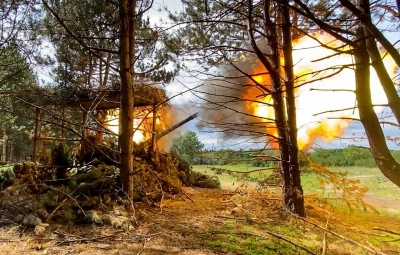
In land warfare, during Operation "Desert Storm" in Iraq, the weight was placed on main battle tanks breaking through enemy defensive lines. However, this approach was abandoned by the West in Ukraine, following the transition to 21st-century trench warfare dominated by drones. The approach of superiority through excessive spending favored both the American military-industrial complex and the hegemony of the dollar, essentially allowing the United States to "print" the money for these massive military expenditures.
The war of 2026 changed everything
Then came the Iran war of 2026, whose asymmetric model overturned conventional military theories. Instead of air superiority, Iran sought dominance through advanced missiles within the airspace.
Instead of surface military installations, missile arsenals, launch facilities, and a large part of missile production were dispersed across Iran's vast geographical reaches and buried deep within underground "missile cities" and mountainous regions. The fundamental transformation of the asymmetric approach, however, was the emergence of cheap and easily available technological components.
While the West spent millions of dollars on each interceptor missile, Iran and its allies spent hundreds. The advantage of dollar hegemony was thus transformed into a weakness: the inflated cost of American munitions and the excessive complexity of weapon systems created cumbersome supply chains, long production cycles, and limited weapon stockpiles.
The alleged technological superiority of American weapons is now being surpassed by "garages" and small workshops using cheap technological components! These produce innovations which, after informal testing, are adopted and expanded by military authorities.
Russia and Hezbollah change the battlefield
This trend is particularly evident in the Russian military, where technologies originally developed in "garages" were tested and then applied more broadly across military structures. This applies to both technological equipment and AI innovations and online systems.
In a similar way, Hezbollah's innovation with drones controlled via fiber optics changed the war in Southern Lebanon, causing serious losses to Israeli tanks and troops, to the point that the Israeli Defense Forces (IDF) may be forced to withdraw from the south.
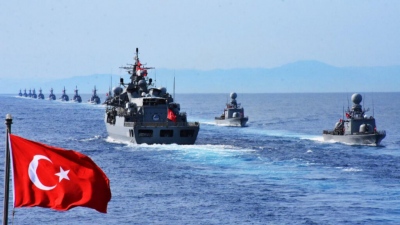
At the same time, asymmetric innovation at sea is overturning the traditional Western reliance on large warships and aircraft carriers. American aircraft carriers turned into "white elephants" in the Persian Gulf war, as drone swarms and anti-ship missile threats forced them to operate so far from the Iranian coast that their aircraft were operationally restricted by the need for aerial refueling.
The image of dozens of armed speedboats moving toward a massive conventional warship highlights the new vulnerabilities of traditional fleets. And Iran possesses other anti-ship weapons. In short, an American aircraft carrier no longer inspires fear as it did in the past; it now radiates vulnerability!
Underwater drones and new naval warfare
The new Iranian naval warfare also includes high-speed loitering underwater drones—or torpedoes—that can remain active for up to four days and possess targeting capabilities through artificial intelligence. These drones can be launched from underground tunnels beneath the waters of the Straits of Hormuz.
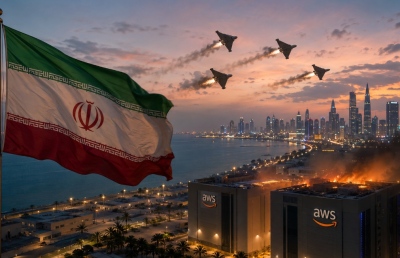
Iranian innovation had been planned and developed for years. Its effectiveness was proven during the conflict with Israel and the United States. Iran withstood Israeli and American mass bombardments—despite suffering severe damage and losses—and nevertheless continues to control the Straits of Hormuz, possesses abundant missile stockpiles, and has rendered American bases in the Gulf destroyed and non-functional.
The West failed to understand the new war
The broader strategic conclusion is that this war showed the Western "way of war" has been surpassed by cheap innovative technology and careful asymmetric planning. The Western model can cause enormous destruction—this is not disputed—but the lack of surgical precision now acts counterproductively in an era of mass media and smartphones that record civilian deaths, destruction, and human suffering.
The second conclusion is that the West remains a cumbersome giant that failed to understand—let alone predict—the new asymmetric warfare. Innovation has been trapped within the concentration of the military-industrial complex into a few bureaucratic monopolies. The Western model of warfare proves to be a failure against a sophisticated asymmetric opponent.
Russia and China watch closely
Other powers have already understood the lessons of the war with Iran. Russia is one of them. China is another. And others will follow. The West will see these lessons appear in different forms on the rest of its war fronts.
The European elites may discover that their support for Ukrainian drone attacks deep within Russian territory may provoke a different response in the near future. The warnings have already been given. The question is whether they will be heard.
www.bankingnews.gr









Σχόλια αναγνωστών